

 Snugglers
Choosing a luxury dog bed in the UK in 2026 means weighing five very different things at once: how your dog sleeps, what their joints need, how the bed has been made, the materials it is filled with, and how it will hold up to washing, chewing and a long Sunday afternoon. This guide walks through each in turn — and compares the five luxury bed styles handmade by The Stylish Dog Company in Britain, so you can match the right bed to the right dog.
This is a buying guide, not a sales page. We will name what each style is best at, what it is not, and where the trade-offs sit. If you want to skip ahead, the comparison table further down sets the five styles side by side.
What “luxury” should actually mean in a dog bed
“Luxury” in dog beds has been thoroughly diluted. The word now sits on mass-produced beds shipped from overseas and on hand-stitched British-made beds that take a saddler a day to construct. Before we compare styles, here is what the word should be earning.
- Provenance. A genuinely luxury bed has a maker, a place and a build process you can name. “Handmade in England” should mean the bed was actually cut, sewn and finished in England — not finished from imported parts.
- Materials with a stated source. The fabric, the filling and the lining each affect comfort, washability and lifespan. A luxury maker will tell you what each one is and where it came from.
- Construction you can see. Reinforced seams, real piping, proper zips, replaceable inner cushions. The cheap version of every luxury feature exists; the difference is visible at the seam line.
- Sizing built around dogs, not retail logistics. A serious maker will offer a range of sizes including the awkward middle ones (medium-large, large-XL) and will publish bed dimensions and weight ratings rather than vague “small / medium / large”.
- Repairability. Premium beds should be made to be re-covered, re-stuffed or re-piped — not landfilled when the cover frays.
If a brand does not lead with all five of those things, “luxury” is doing more marketing work than design work.
Five luxury dog bed styles, explained
Different dogs sleep in different shapes. The biggest mistake new owners make is buying the bed that looks the smartest in the kitchen, rather than the bed shaped for how their dog actually rests. The five styles below cover the vast majority of sleeping preferences.
1. The Snuggler — for dogs that curl, burrow and den
Snuggler beds are deep-walled with a soft, denlike interior, often with a faux-fur or fleece lining and a raised bolster all the way around. They suit dogs who curl into a ball, tuck their nose under their tail, or like to push themselves up against a wall to sleep. Common in this group: dachshunds, whippets, Italian greyhounds, terriers, and most puppies of any breed in their first year.
What snugglers do well: they reduce anxiety in noise-sensitive dogs by giving them a clear edge to rest against. They also keep small or thin-skinned dogs warm without needing a coat indoors.
Where they fall short: snugglers are not for dogs with significant joint pain or for very large breeds. The walls are comforting but they make it harder for an arthritic dog to step in and out, and the enclosed shape traps heat — which suits a chihuahua and overheats a Labrador.

2. The Sprawler — for dogs that stretch out flat
Sprawlers are open, mattress-style beds without high walls. They suit dogs that sleep starfish-flat on their side, often with their legs fully extended. Most retrievers, larger spaniels, sighthounds in adulthood, and many crossbreeds sleep this way.
What sprawlers do well: they give the dog room to thermoregulate by stretching, and they are easier to climb on and off. The flat profile is also more practical in the kitchen or living room — it does not dominate the floor.
Where they fall short: sprawlers offer no head support, so dogs that like to rest their chin on something will end up draping themselves off the edge. If your dog “uses” their bed for security as much as sleep, a sprawler can feel exposing.
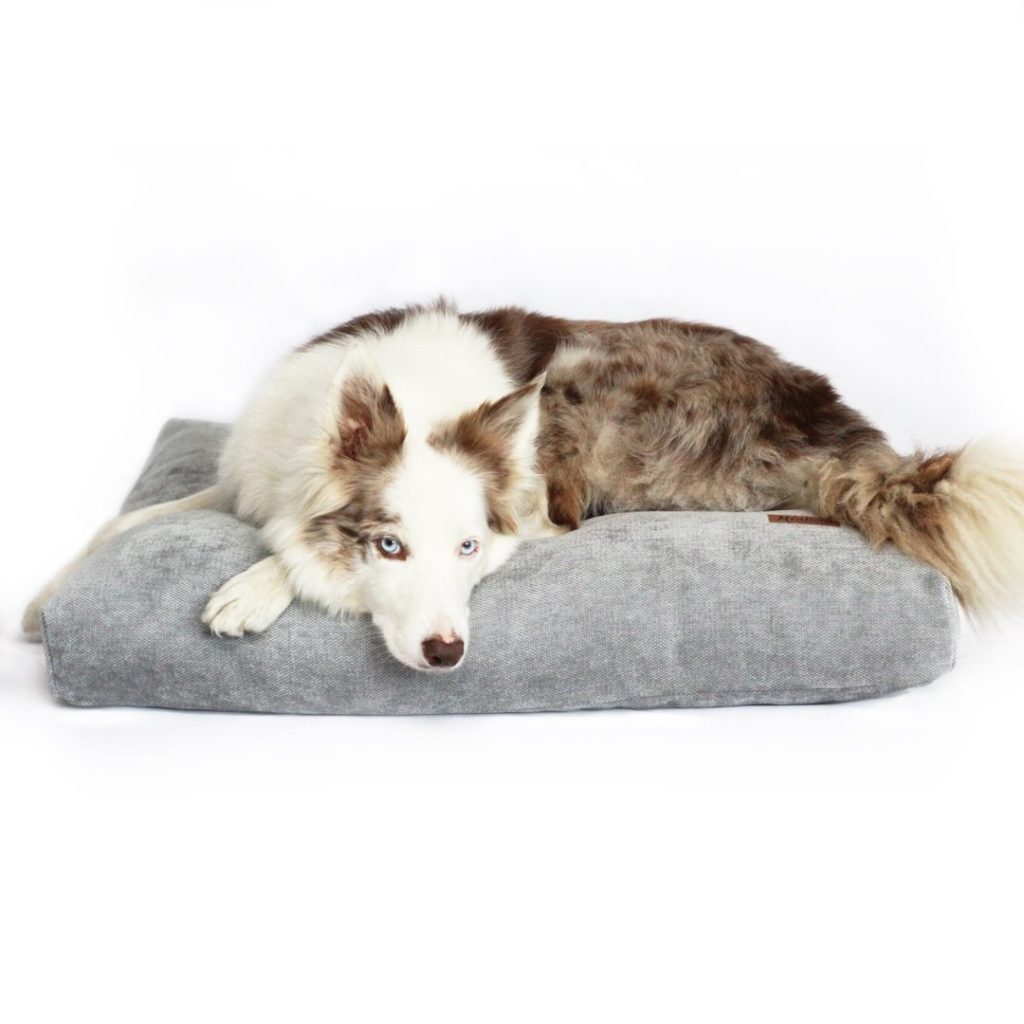
3. The Orthopaedic Bed — for joint support, recovery and senior dogs
Orthopaedic beds use a high-density memory or pressure-relief foam fill, usually 10 cm or thicker, designed to redistribute weight away from hip, elbow and shoulder pressure points. They are recommended by veterinary physios and rehab teams for dogs recovering from surgery, dogs with hip dysplasia or arthritis, and any dog over the age of about seven.
What orthopaedic beds do well: they are the single biggest comfort upgrade you can make for an older dog. The difference in how a senior dog gets up in the morning, after sleeping on supportive foam versus a soft fibre fill, is often dramatic and quick.
Where they fall short: they are heavier, harder to move room-to-room, and they need to be sized correctly. An orthopaedic bed that is too small loses its therapeutic value the moment the dog has to curl onto it. If you have any doubt about sizing, go up.
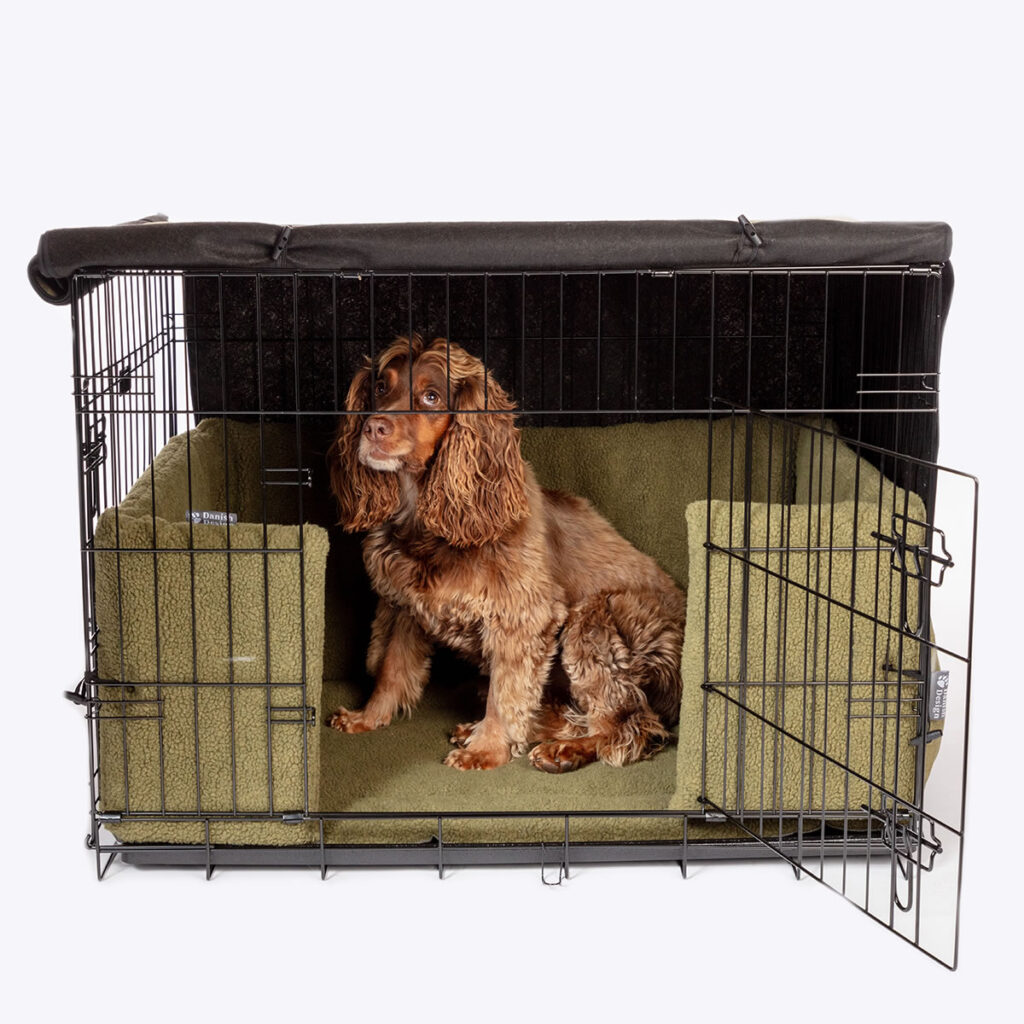
4. The Crate Bed — for in-crate use, travel, car, or covered spaces
Crate beds are sized to fit standard dog crate dimensions, usually with a low profile, no high walls, and a removable washable cover. They suit dogs that crate-train as puppies, dogs that travel often by car or train, and dogs whose owners want a “safe space” bed alongside the main living-room bed.
What crate beds do well: they make a hard plastic or wire crate genuinely comfortable, which matters for dogs that view the crate as a den rather than a confinement. Done well, they are washable, durable, and quick to dry.
Where they fall short: a crate bed is not a substitute for a daytime resting bed. The dimensions are constrained by the crate, not by the dog’s preferred sleeping shape, so most dogs will still need a primary bed elsewhere.
5. The Raised Wooden Dog Bed — furniture-grade, long-life, design-led
Raised wooden beds (also called “elevated”, “platform” or “designer wooden” beds) use a solid wood frame holding a removable cushion or mattress, lifting the dog 10–25 cm off the floor. They suit households where the dog bed is a permanent fixture in the living room, kitchen or hallway, and where the owner wants a bed that reads as furniture rather than a soft sack.
What raised wooden beds do well: they last. A properly built oak or pine frame will outlive several mattress refills. The raised platform also keeps the dog off cold tile or stone floors and is easier to vacuum around. For households with multiple dogs, raised beds give each dog a clear territory.
Where they fall short: they are the highest initial outlay of any of the five styles, and very small dogs or older dogs with mobility issues may struggle to climb on. They are also the heaviest to relocate, so think carefully about where the bed is going to live before you order.
Comparison: the five luxury bed styles at a glance
This table sets out the five styles against the criteria most owners actually decide on.
| Style | Best for | Joint support | Anxiety / security | Washability | Lifespan (typical) | Best size range |
|---|---|---|---|---|---|---|
| Snuggler | Dogs that curl & burrow | Light | High | Cover machine washable | 3–5 years | XS – Medium |
| Sprawler | Dogs that stretch flat | Medium | Low | Cover machine washable | 3–5 years | Medium – XL |
| Orthopaedic | Senior, post-op, joint issues | High (memory foam) | Medium | Cover removable, foam not | 5–7 years | Medium – XL |
| Crate | Crate-trained, travel, in-car | Light–Medium | Medium | Fully washable | 2–4 years (high wear) | All sizes (crate-fit) |
| Raised wooden | Living-room “furniture” bed | Medium (cushion-dependent) | Low | Cushion cover washable | 10+ years (frame) | Medium – XL |
Materials: what you are actually paying for
The price difference between a £40 dog bed and a £200 dog bed is almost entirely in the materials and construction. Here is what to look for, broken into the three layers that matter.
Outer fabric
Faux fur, fleece-lined cotton, brushed cotton twill and water-resistant canvas are the most common premium outer fabrics. Faux fur and fleece are the warmest and most den-like — best for snugglers and small breeds. Cotton and canvas are easier to keep clean and better for dogs who get muddy or shed heavily. Water-resistant fabric is essential for crate beds and useful for dogs with incontinence or post-op recovery.
Filling
Hollow-fibre fill is soft, washable and inexpensive — fine for snugglers and crate beds. Memory foam (or “pressure-relief foam”) is the gold standard for orthopaedic and senior dogs and the most expensive component in any bed. Look for foam at least 10 cm thick rated to support the dog’s weight; cheap “memory foam” beds often use a thin layer of memory foam on top of low-density foam, which collapses inside six months.
Cover and zip
The single biggest predictor of a bed’s lifespan is whether the cover comes off and goes in the washing machine. A removable, machine-washable cover with a heavy-duty zip is the difference between a bed that lasts five years and a bed that lasts five months. Avoid beds where the only zip is a flimsy sewn-in nylon coil — they fail first.
Sizing a luxury dog bed: the rule that actually works
The standard advice — “small / medium / large” — is useless. Use this method instead.
- Measure your dog from the tip of the nose to the base of the tail while they are standing relaxed.
- Add 15–20 cm for a snuggler (so they have room to curl with the bolster wall touching their back) or add 25–30 cm for a sprawler or orthopaedic bed (so they can stretch fully).
- For raised wooden beds, use the cushion’s internal dimensions, not the frame’s external dimensions, when comparing to your dog’s measurement.
- If in doubt, go up. A slightly oversized bed is comfortable; a slightly undersized bed is unusable.
Most reputable UK luxury bed makers will publish internal cushion dimensions and a recommended dog weight range alongside each size. If a maker only publishes “Small / Medium / Large” with no cm or weight, treat that as a quality signal — they have not thought about sizing properly.
British craftsmanship: what to look for
“Made in Britain” is one of the most over-claimed phrases in pet retail. Here are the markers that distinguish genuinely British-made beds from beds that are merely finished or labelled in Britain.
- The maker can name the workshop or county. Beds made in Britain come from workshops in places like Leicestershire, Yorkshire, Devon, Cumbria. If the brand cannot name the location, it is unlikely to be British-made end-to-end.
- The beds are built by hand, not assembled from kits. A genuine British luxury bed has a saddler, an upholsterer or a sewer who individually constructs each bed. Mass-cut, mass-stitched, mass-stuffed beds finished in a UK warehouse do not meet this standard.
- Lead times reflect handmade reality. Custom or made-to-order luxury beds typically take 1–3 weeks to make. A “British handmade” bed available for next-day delivery in any colour and size is almost certainly not what it claims.
- Repair is offered. A British maker who builds beds to last will also re-cover, re-stuff or re-pipe them. If the only customer service option is a replacement, the bed was not built to be repaired.
Care, washing and lifespan
A luxury dog bed should outlast at least two seasons of heavy use, and most should last between three and seven years. Here is how to get that lifespan.
- Wash the cover at 40 °C every two to four weeks. Hotter washes will degrade faux fur and fade cotton dyes. Air-dry over a clothes airer; tumble drying weakens elastics and zips.
- Vacuum the inner cushion or foam monthly. Hair, dust and skin shed by your dog accumulate inside the bed and cause faster fibre breakdown.
- Rotate the cushion every couple of weeks. Dogs press the same area each time they lie down. Rotating delays compression on one side.
- Replace, do not bin. When a cover wears out, order a replacement cover from the maker rather than throwing the bed out. A replacement cover is typically 30–40 % of a new bed’s price and resets the lifespan.
Anti-anxiety and calming beds: do they work?
“Calming” and “anti-anxiety” are common descriptors on snuggler-style beds. The mechanism is real — a deep, walled, faux-fur bed reduces visual stimuli, gives the dog a clear sense of edge and territory, and warms them in a way that mimics being among other dogs. For noise-sensitive, rescue or first-year puppy dogs, the effect on settling is substantial and well-documented in canine behaviour research.
“Calming” beds will not, however, treat clinical anxiety. If your dog is destroying beds, has separation anxiety, or shows persistent fear behaviours, the bed is a tool to be used alongside training, environment and (where indicated) veterinary input — not a solution on its own.
About The Stylish Dog Company
The Stylish Dog Company has been making luxury dog beds in Britain since the company was founded. Our luxury beds are handmade in England using British-sourced materials wherever possible, with removable machine-washable covers, replaceable inner cushions, and a sizing range built around real dog measurements. We also make the matching leather dog collars in the same English saddlery tradition. Free UK delivery on all orders over £75.
If you would like help choosing the right bed style and size for your dog, drop us an email — we read every message and reply personally.
Frequently asked questions
What is the best luxury dog bed for an older dog?
The best luxury dog bed for an older dog is an orthopaedic memory foam bed at least 10 cm thick, sized so the dog can fully stretch out without their head or hindquarters falling off the edge. Avoid high-walled snuggler beds for older dogs — the walls make it harder to step in and out comfortably.
Are British-made luxury dog beds worth the price?
British-made luxury beds typically cost two to four times the price of imported mass-produced beds. They are worth it for two reasons: build quality (replaceable covers, repairable construction, longer lifespan) and provenance (you know who made the bed and from what materials). On a per-year-of-use basis, a £200 bed lasting six years is cheaper than a £50 bed lasting one year.
How big should my dog bed be?
Measure your dog from the nose to the base of the tail while standing. Add 15–20 cm for a snuggler-style bed, or add 25–30 cm for a sprawler or orthopaedic bed. If your measurement falls between two sizes, always go up.
Can luxury dog beds go in the washing machine?
The cover of a properly made luxury dog bed should be removable and machine washable at 40 °C. The inner cushion or foam should be vacuumed or spot-cleaned only. If a luxury bed has no removable cover, it is not built to be washed and will need replacing rather than refreshing.
What is the difference between a snuggler and a sprawler dog bed?
A snuggler dog bed has high cushioned walls and a deep den-like centre, designed for dogs that curl, burrow or sleep against an edge. A sprawler is an open mattress with no walls, designed for dogs that stretch out flat on their side. Match the bed to how your dog actually sleeps, not to how the bed looks in your kitchen.
Do luxury dog beds help with anxiety?
Snuggler-style beds with high faux-fur walls help with mild settling anxiety, noise sensitivity and rescue-dog adjustment by giving the dog a den-like edge to rest against. They are not a treatment for clinical anxiety or separation anxiety, which need to be addressed with training and (where appropriate) veterinary support.
How long should a luxury dog bed last?
A well-made British luxury dog bed should last three to seven years for the cushion or mattress, and ten years or more for a raised wooden frame. Lifespan depends largely on whether the cover is removable and washable — this is the single most important durability factor.
Last updated: 4 May 2026.

Best Sellers
Soft Leather Puppy Collars | Range of colours
Padded Leather Dog Collar Red and Black padding
Brown and Denim Blue Padded Leather Dog Collar
Padded Leather Dog Collar | Navy and Orange padding
Padded Leather Dog Collar | Black and Red padding
Gift Cards for Dogs
Brown and Blossom Pink Padded Leather Dog Collar
Soft padded leather dog collar | Red and cream