
Written by The Stylish Dog Company.
Last updated: 10 October 2026 · By The Stylish Dog Company · Guidance sourced from UK veterinary charities and The Kennel Club
Read time: about 5 minutes
In brief
Dogs can eat many everyday vegetables, including carrots, green beans, peas, broccoli, sweet potato and cucumber, as long as they are plain, cut small and given as an occasional treat. Onions, garlic, leeks and chives are dangerous even when cooked, and raw or green potato, tomato plants and wild mushrooms should also be kept away from your dog. If your dog eats something toxic, contact your vet straight away.
Jump to a section
Which vegetables can dogs eat?
PDSA says dogs do not need vegetables, but a small amount makes an occasional treat. These are the ones UK charities and the Kennel Club say are fine.
- Carrots, green beans and peas. Raw or cooked, says PDSA. Blue Cross says green beans are more digestible cooked and can cause wind.
- Broccoli and Brussels sprouts. Raw or steamed (sprouts steamed or boiled), in very small quantities, because PDSA says large amounts can cause illness.
- Sweet potato. Cooked and peeled, says PDSA, as some dogs find the skin hard to digest.
- Cabbage. Fine, says Blue Cross, but it can cause wind, so go slowly.
- Celery and sweetcorn. Celery raw; sweetcorn cooked and cut off the cob, says PDSA.
- Pumpkin and squash. Cooked flesh with the seeds and rind removed, says the Kennel Club, or unsweetened tinned pumpkin.
- Plain cooked potato. Small amounts, with no oil, butter or salt, and PDSA suggests removing the skin, which can upset some tummies. More on potatoes below.
Dogs Trust also lists cucumber, asparagus, aubergine, beetroot and ripe tomatoes as usually fine in moderation.
How should I prepare them?
Keep it plain and small. PDSA says offer bite-sized, seedless pieces with no oil, butter, salt or flavourings, and the Kennel Club says to cut them very small if your dog gulps food. Dogs Trust warns that corn on the cob can cause life-threatening blockages, and Blue Cross says uncooked dried beans, such as kidney beans, are toxic. We also suggest trying one new vegetable at a time, so you can spot which one upsets a tummy.
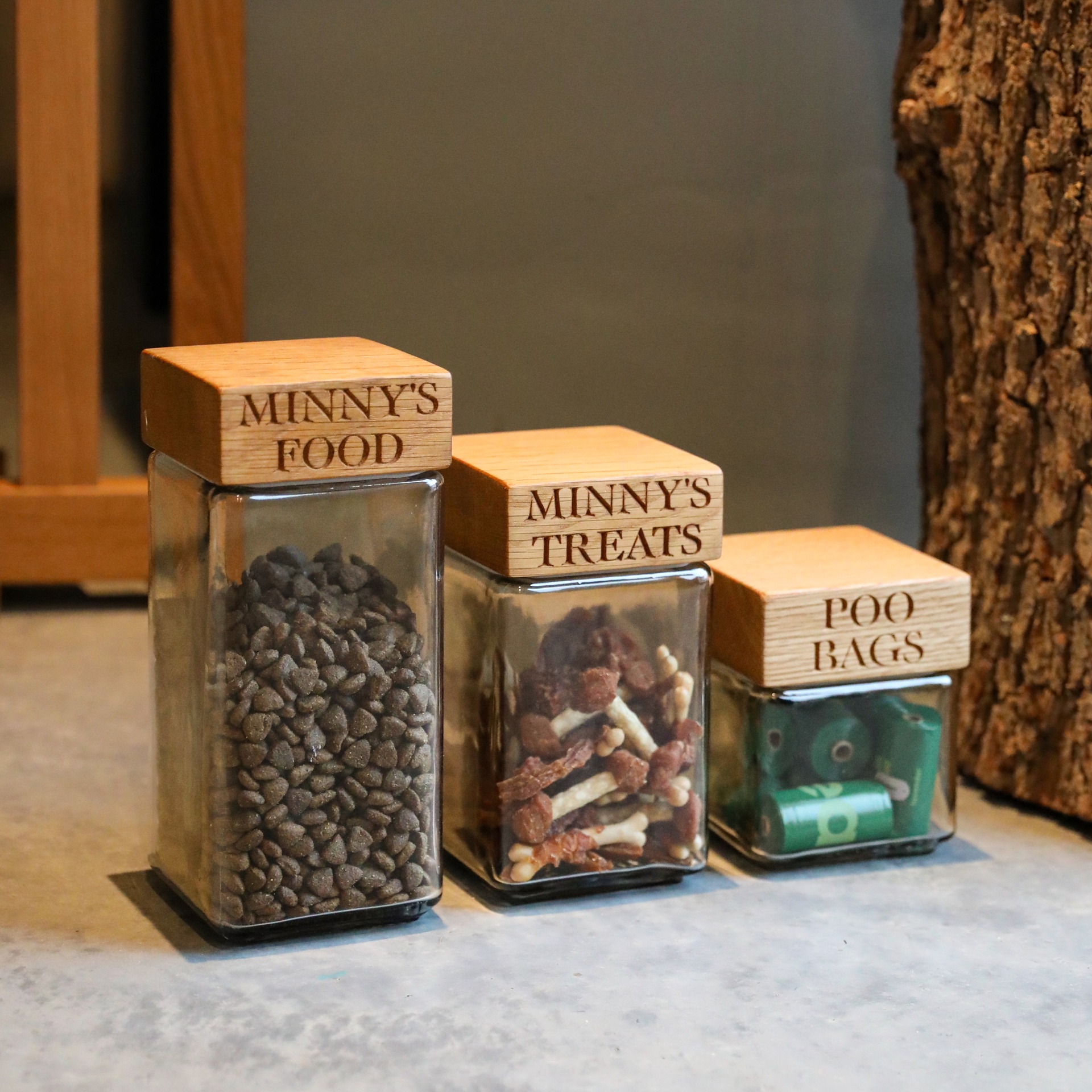
If you are choosing a bowl for their dinner, see our ceramic dog bowls and personalised dog bowls and treat jars.
How much is too much?
Treat vegetables as extras. Blue Cross says they should be a small part of the daily diet, PDSA says to reduce meals to match any treats, and the Kennel Club says to count treats in the daily calories. None of these sources gives a fixed percentage, so ask your vet if your dog has a health condition or special diet.
Which vegetables are dangerous for dogs?
Onions, garlic, leeks and chives. With shallots, these make up the allium family. The Kennel Club says they can damage red blood cells and cause life-threatening anaemia, and Dogs Trust says they can be toxic even cooked, including traces in gravy. The RSPCA also names onions as poisonous. Blue Cross says signs usually appear within a few days and can include tiredness, trouble breathing and pale gums.
Raw and green potato, and tomato plants. PDSA says raw potato contains solanine and should never be given. Blue Cross says to avoid green potato skin, and tomato leaves, stems and young green tomatoes, though ripe tomatoes are fine.
Wild mushrooms. Blue Cross says to always avoid wild mushrooms, toadstools and fungi, and that shop-bought button or white mushrooms should always be cooked.
Grapes and raisins. These are fruit, but they are worth knowing. Dogs Trust says any amount is potentially dangerous, as they can cause kidney failure.
If your dog eats something toxic
Call your vet straight away. Blue Cross says to contact your vet immediately, even after a small amount, as acting quickly is vital. The Kennel Club adds: do not try to make your dog sick, tell your vet what was eaten, how much and when, and take any packaging or plant sample with you.
Key takeaways
- Carrots, green beans, peas, broccoli and sweet potato are fine plain, in small pieces, as occasional extras.
- Onions, garlic, leeks and chives are dangerous even when cooked.
- Avoid raw or green potato, tomato plants, wild mushrooms, corn cobs and grapes.
- If your dog eats something toxic, call your vet straight away.
Frequently asked questions
Can dogs eat vegetables every day?
Only in small amounts. Blue Cross says fruit and vegetables should make up a small part of a dog’s daily diet, alongside a balanced main meal, and PDSA says dogs do not need them at all. Ask your vet if you are unsure how much suits your dog.
Can dogs eat raw vegetables?
Some, yes. PDSA lists carrots, green beans, peas and celery as fine raw, and broccoli raw or steamed in very small quantities. Raw potato is the exception, because PDSA says the solanine in it is toxic to dogs.
Are onions still dangerous once they are cooked?
Yes. Dogs Trust says onions, garlic, leeks and chives can cause anaemia even when cooked thoroughly, and that any traces in food can be toxic. The Kennel Club says signs may take a few days to appear.
What should I do if my dog eats a grape or raisin?
Contact your vet straight away. Dogs Trust says any amount is potentially dangerous, and the Kennel Club says kidney failure can sometimes be delayed by up to three days, so prompt treatment matters.
Sources and further reading
- PDSA. Your dog’s diet, including which fruit and veg dogs can eat
- Blue Cross. What fruit and vegetables can dogs eat?
- Blue Cross. Poisonous foods for dogs
- Dogs Trust. What foods are toxic and poisonous to dogs?
- The Kennel Club. Poisonous food for dogs
- The Kennel Club. Healthy treats for dogs
- RSPCA. A healthy diet for dogs